

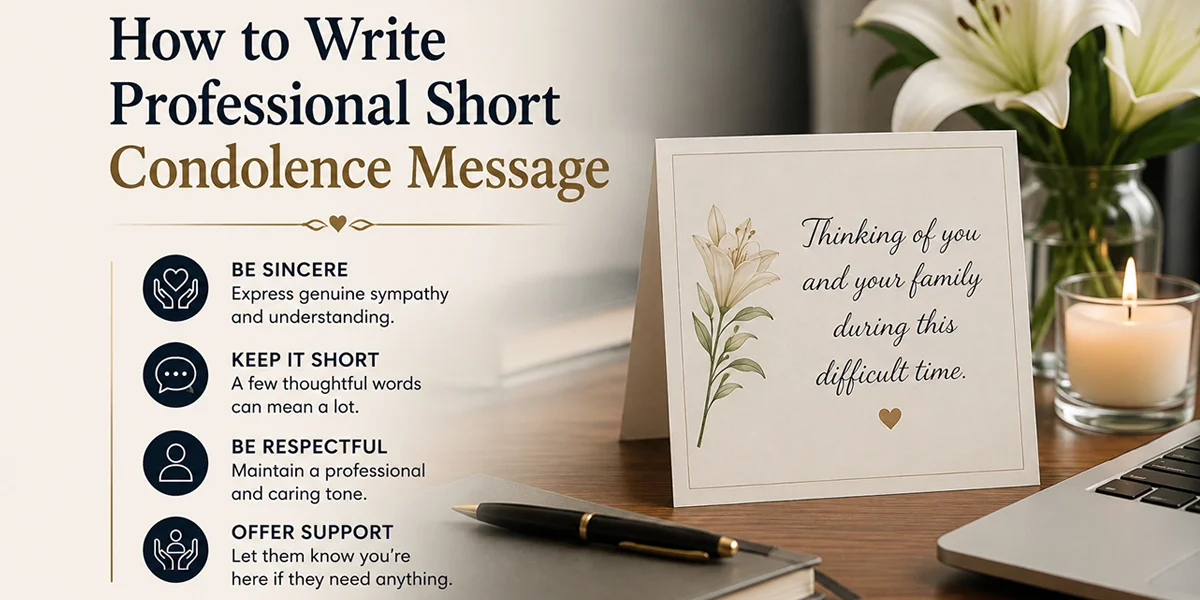
Showing sympathy to a colleague who is suffering from the loss of a loved one, in a meaningful way, can be a challenging task. Especially in a professional setting, where it is really important to balance sympathy with formality, a well-crafted message can provide them comfort and create a sense of community in your workplace.
Research by psychologists has shown that people with a good social support network have lower chances of depression and anxiety and manage grief more effectively. This makes showing social support through condolence messages even more important.
In this guide, we share how you can craft a meaningful short condolence message in a professional setting, whether you are sending it to your boss, colleague, or manager.
What is a Professional Short Condolence Message to a boss?
A short & sincere professional sympathy message can be a real act of kindness in the workplace – it’s a reminder that grief doesn’t take a lunch break & that people deserve a little bit of compassion even when the workday is going on. But getting that balance right between offering support & keeping things professional is really important.
When someone loses a loved one, they can quickly feel like they’re disappearing from view because everyone around them is avoiding the topic or changing the subject too fast. It’s a really awkward situation where instead of getting the support they need, they just feel like their loss is being erased. By sending a genuine condolence message though, you can break that awkwardness & let the person know their pain is real – & that they’re not invisible after all.
Why Does a Simple Condolence Message Matter on Death?
By sending a simple workplace condolence message to a grieving coworker, you can give them some comfort during their difficult time. It reminds them that you are thinking of them and that they will receive support after returning to the workplace. This will also help you strengthen your relationships, which will aid in building a better and more supportive workplace culture.
This action will help them during the period of grief because many people can feel overwhelmed by lengthy messages. Short condolence messages perfectly balance sympathy without adding to their emotional burden. Whether you are sharing the message through a card, text message, or in person, these short messages can be great sources of support. They resonate more deeply than fully comprehensive messages because they focus on genuine empathy instead of using complex language.
How to write a death condolence message professionally?
If you want to write a death condolence message professionally, you should make it genuinely comforting without overwhelming the recipients. You can do that by adding these key elements to your message to show genuine sympathy:
Start with genuine Sympathy: You should start the message with a sincere condolence message that reflects your genuine feelings because the condolences should come from your heart and your understanding of their loss.
Acknowledge the Loss Directly: Mention the name of the deceased person directly to acknowledge their loss and recognize their sadness.
Example:
“I was saddened to learn about the passing of [name of the deceased person].”
Provide Heartfelt Condolence: Then, honestly share your condolences without overwhelming them, where you can use phrases like: “I am so sorry for the loss of your spouse. My heart goes out to you during this tough time.”
Make It Short: While sending a condolence message in a professional setting, you need to make it short and simple, as people in a bad mood won’t have the patience to read through a long passage. So, you should keep the message brief and direct, while avoiding lengthy sentences.
Consider the timing: While sending a condolence message, it is ideal to consider timing, and it should ideally be sent within two weeks after a death. However, it is never too late to send someone a sympathy message to express your heartfelt empathy.
What to say to your boss when someone dies, condolences professionally?
If your boss loses someone close and you do not know your boss well, you simply want a line that does its job without overdoing it. It is also important to never forget the “we have it covered” line, as even though you can’t fix the grief, you can at least share half the workplace stress. These are some default phrases that you can use to comfort them:
- “I am deeply sorry to hear about your loss. Please accept my sincere condolences during this difficult time.”
- “Thinking of you and your family. Wishing you peace and comfort as you navigate this challenging period.”
- “My heart goes out to you and your loved ones. Please take all the time you need; we have everything handled here.”
- “I was so saddened to learn of your loss. Sending you strength, support, and my deepest sympathy.”
- “Please know that our thoughts are with you and your family. We are here to support you in any way you need.”
- “Extending my deepest condolences to you and your family. May cherished memories bring you comfort.”
- “I am so sorry for your loss. Wishing you moments of peace and healing during this sorrowful time.”
- “Sending my heartfelt sympathy to you and your family. Please take care of yourself right now.”
- “Deeply saddened by the news of your loss. Our team is keeping you in our thoughts and wishing you strength.”
- “Please accept my warmest condolences. We are all holding you in our thoughts during this painful time.”
What not to say when expressing professional condolences?
While writing a condolence message, it can be hard to know what to say to provide comfort to the bereaved person, but it can be even harder to know what not to say. Many people are worried about saying the wrong thing and upsetting other people, so avoid phrases such as:
“I am sorry, but at least they lived a long life.”: It does not matter how long their loved ones live, as it will never be enough for them.
“Everything happens for a reason”: It can hurt the other person because it sounds like the loss was somehow deserved, which will be deeply insensitive.
“I can understand your pain. “The acknowledgment of loss should be done with the right words, and you should not say this statement even if you have suffered from a similar loss.
“Don’t worry, they are in a better place now. “The sentiment behind this statement may stem from a good intention, but you should respect a person’s personal belief and avoid making any assumptions about them.
“Be Strong” or “Stay Strong”: Asking someone to be tough during the grieving process is a bad decision because it is a natural process, and they are entitled to experience the loss fully.
Examples:
- “Make sure you catch up on your emails when you get back.”
- “We really need you back in the office soon because things are chaotic.”
- “At least you’ll have more time to focus on your career now.”
- “I know how you feel, my dog passed away last month.”
- “Try not to let this affect your performance too much.”
What are professional ways to say a condolence message?
Words are important because of their immense power, but it’s also important to use them in a correct way and manner. The feeling of losing a loved one is really personal, so you should use the correct way while giving condolence especially in a professional setting:
Email and Text Messages: It is the most common way to send a condolence message in a professional setting because it allows you to send a quick and short condolence. Especially when you can provide support as quickly as possible.
Handwritten Letters: It is a gold standard for sending condolences professionally, especially when you are sending it to your coworker’s family or are aiming to provide a long-term and tangible expression of sympathy.
Phone Calls: In a professional setting, a phone call is only a good idea if you are already close to the suffering person, as calling the person is appropriate if you have a longer-standing relationship with the other person.
FAQs – short condolence message professional to boss
How do you professionally say sorry for a loss in an email?
These are the 5 professional phrases that you can use to say sorry in an email;
- “I was deeply saddened by your recent loss.”
- “Words seem unable to convey your pain, but please accept my heartfelt condolences.”
- “Wishing you strength; take care”
- “May you find peace in the memories of [deceased person name].”
- “Sending you positive thoughts, and please know that you are not alone in your grief.”
How do I say my condolences in a less formal way?
Suppose you want to be more personal and comfortable with your choice of words while sending a professional condolence message. You can use some of these examples:
- “I am here for you during this hard time. You can talk to me if you need anything. Sending you love and strength.”
- “I hope you find solace in the beautiful memory and company of your loved one.”
- “I am really sorry about your loss. If there is anything I can do to lower your burden, please don’t hesitate to reach out.”
How to professionally say “sorry for your loss” to your boss?
Saying sorry to your boss professionally requires empathy and understanding of the situation. To offer them support, you need to use a phrase that sounds professional while also directly acknowledging their loss. Examples Include:
- “My condolences to you and your family on the loss of [name]. May they rest in peace.”
- “I am here for you and your family during this difficult time. Tell me, if there’s anything I can do to help.”
- “I will always remember them for their kindness and generosity.”
What to say instead of “How are you?” to your client who is grieving?
Saying “How are you?” is the most common way people start conversations, but for someone who is grieving, this is more than a simple question. So, whenever you feel like asking it, you might reconsider it before saying it and use these alternatives.
- “Hey, I was thinking about you.”
- “Hi, would you like some company right now?”
- “How are you eating lately?”
- “Did you sleep well last night?”