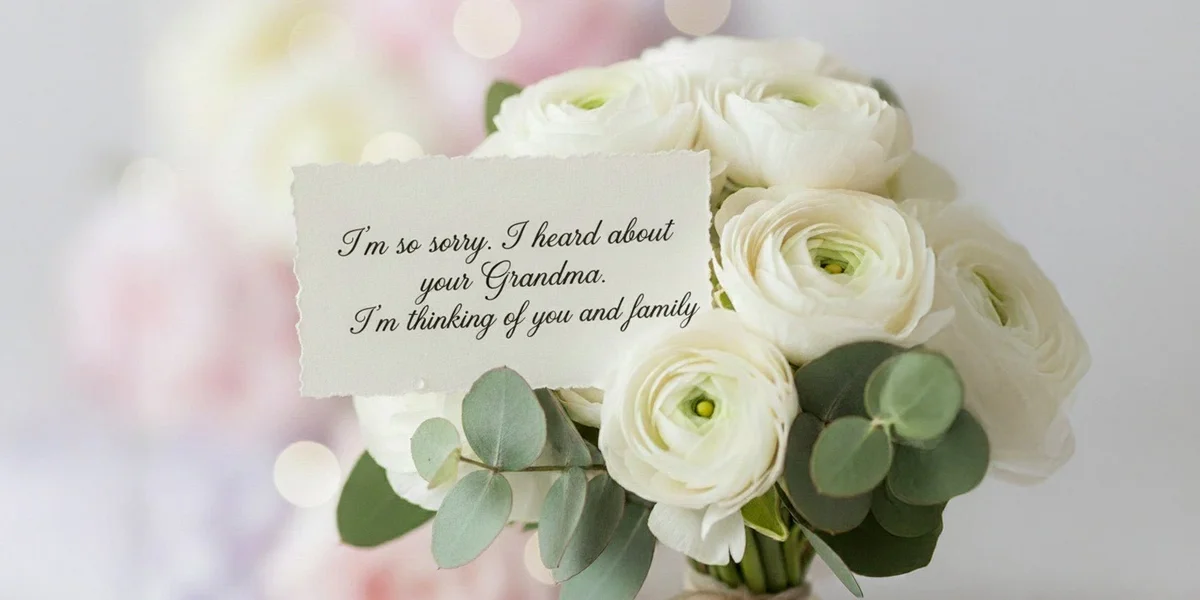


Sending a condolence or sympathy message is a silent way to show your care and support to the bereaved. It’s a sad situation when someone we know dies, but did you know most of us don’t know what to write and send as a condolence message? In this grief, a well-structured and thoughtful condolence message with empathy is required.
Condolence or sympathy messages should be written in a way that honours the life of the deceased and supports the bereaved. Condolence notes or letters are an integral part of the grieving process. By learning how to write a heartfelt condolence message, you not only help the bereaved, but they may also save your message and reread it in years to come during grieving period.
What is a condolence message?
When someone is in the grieving phase, the words in a condolence message or letter hold great significance for the bereaved. It’s a supportive and thoughtful gesture towards family or individuals who are grieving the loss of a loved one.
“Condolence comes from the Latin condolere, which means “to suffer together.”
In simple terms, condolences can be expressed in many ways: in-person, written, or digital messages. Short condolence messages with the proper structure are best for comforting someone without overwhelming them, respecting their grief time and space.
Different countries and their unique traditions have various ways of expressing condolences. Some send long, deep, and elaborate condolence messages, while others send just a single short and emotional condolence sentence.
Whether a short or long condolence message, the primary purpose is to show sympathy to a grieving person in their grief period and let them know you’re with them.
How to write a condolence message?
Top 5 Parts for writing the best condolence message
1. Begin with a brief introduction.
As with any condolence message or letter, you must start with a set of gentle and respectful tone. For example,
“My dear friend,”
“Dear [Include Name],”
“To the [Family Name] Family,”
“Hello [Name], I just wanted to reach out…”
2. Write the main heartfelt condolence message.
It’s time to start writing the main purpose of the condolence message. The primary part of a condolence message or letter should be concise yet filled with sorrow or heartfelt feelings, expressing your sympathy towards the bereaved. For example,
“My heart goes out to you and your family.”
“Please accept my heartfelt condolences for your loss.”
“Thinking of you during this difficult time.”
3. Share a memory or brief story (if you’ve with the deceased).
If you have a memory or story with the deceased, you can include it in your condolence message or letter. Remember, keep it brief so as not to overwhelm the recipient. For example,
“I cherish the memory of [Deceased’s Name] teaching me how to bake their famous cookies, patiently guiding me with a smile.”
“I’ll never forget when [Deceased’s Name] and I spent an afternoon fishing, swapping stories and laughing like old friends.”
“I still smile thinking about how they’d sing off-key at every gathering, bringing joy to us all.”
4. Offer extra support (if appropriate).
It is an optional part, and if suitable, add an extra line in your condolence message to express your willingness for additional help. This part is optional and can be added based on the situation, but it can provide a personal touch. For example,
“I’m here for you if you need to talk or need any help.”
“Don’t hesitate to reach out if you need support.”
“Please let me know if there’s anything I can do for you.”
5. Close the message with a memorable signature.
Finally, it’s time to bind up your condolence message or letter with a thoughtful and memorable closing signature. Ensure it reflects your relationship with the recipient. For example,
“Warmest regards,”
“Sincerely, [Your Name]”
“With sympathy,”
“Thinking of you,”
What to say in a condolence message?
- I’m so sorry.
- I don’t know what to say; I wish I had the right words to heal you.
- I can’t imagine what you’re going through.
- She was so great to me; one of my favorite memories of her was… (share a happy memory of the person who passed).
- You, your family, and your loved one will be in my thoughts and prayers.
- She was so amazing; so many people will miss her.
- When you want to talk, I’m a phone call away.
- I’m your friend—I’m here for you always.
- If you can’t think of anything to say, a hug may be appropriate.
- Sometimes, be with the person; you don’t have to say anything.
What not to say in a condolence message?
- He/she lived a long time; at least he didn’t die young.
- It’s been a while, aren’t you over her yet?
- She’s in a better place.
- You’ll get through it; be strong.
- He brought this on himself; it was his fault.
- You’re young. You can always have another child.
- God must have wanted her there because she was such a good person.
- It was his time to go.
- I know exactly how you feel.
- Everything happens for a reason; life goes on.
3 best ways to deliver a condolence message
- Cards (Classic way): Sending or giving condolence or sympathy cards is a classic way to show your sympathy to the bereaved. Cards are a good choice for distant relatives, acquaintances, or colleagues. To give a more personal touch, you can attach a handwritten note to a card. It shows the recipient that you took your time to compose your condolence message considerately.
- Text Messages (Fast Way): Condolence text messages are an ideal way to express your sympathy immediately, especially to close friends or family members. A short text condolence message provides instant support and shows the recipient that you’re with them. Along with text messages, you can call or visit if your relationship is strong and close.
- In-Person Meeting (Personal Touch): In-person meetings are usually reserved for very close friends, family members, or those whom you want to give immediate support. In-person condolences are a more personal and heartfelt exchange. Adding a physical touch, like a hug with words, enhances your sympathy and support.
FAQs on How to Write a Condolence Message
What’s the point of sending condolences?
Mainly to express your sorrow and support to someone who has lost someone they love. Condolences show the bereaved they’re not alone in their grief.
How do you start a condolence note?
You can start with heartfelt opening words like “Acknowledge the Loss,” “I’m so sorry for your loss,” or “My deepest sympathies to you and your family.”
Can I send my condolences by text?
Yes, absolutely! Especially to close friends and family. A quick sympathy text lets them know you’re with them.
What’s the etiquette for sending condolences?
Keep it short and to the point, a few sentences at most. Focus on your feelings, not the length of the message.
Conclusion
Writing a condolence message is not a challenging task, but crafting it properly with an accurate structure can be a difficult task. Expressing your inner sorrow and sympathy to the bereaved in the correct word’s arrangement is not a child’s play. However, following the above tips and guide at CondolencesPlus helps you write a sympathy message that expresses your condolences in a way that is both appropriate and supportive, showing respect for the grieving person’s needs.